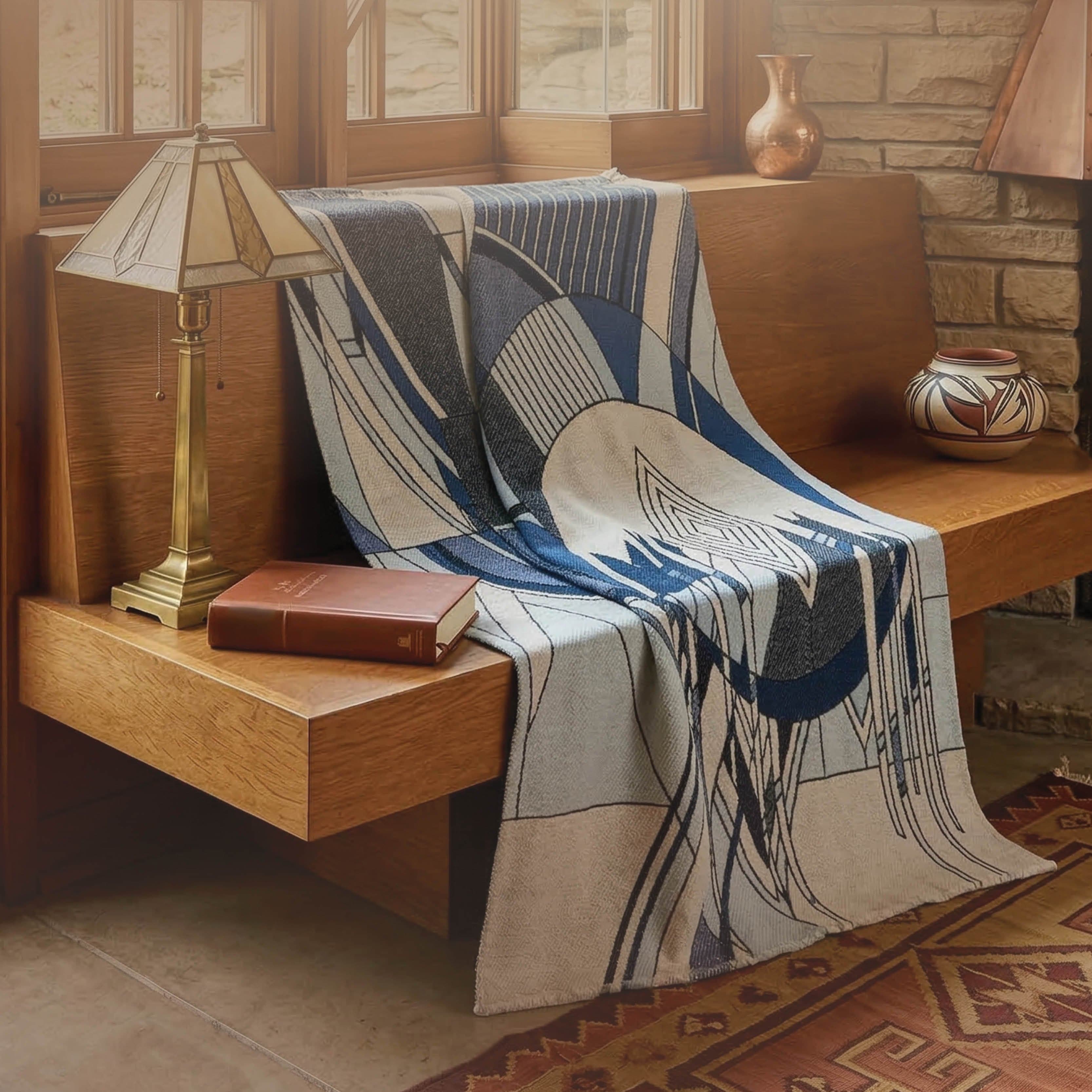
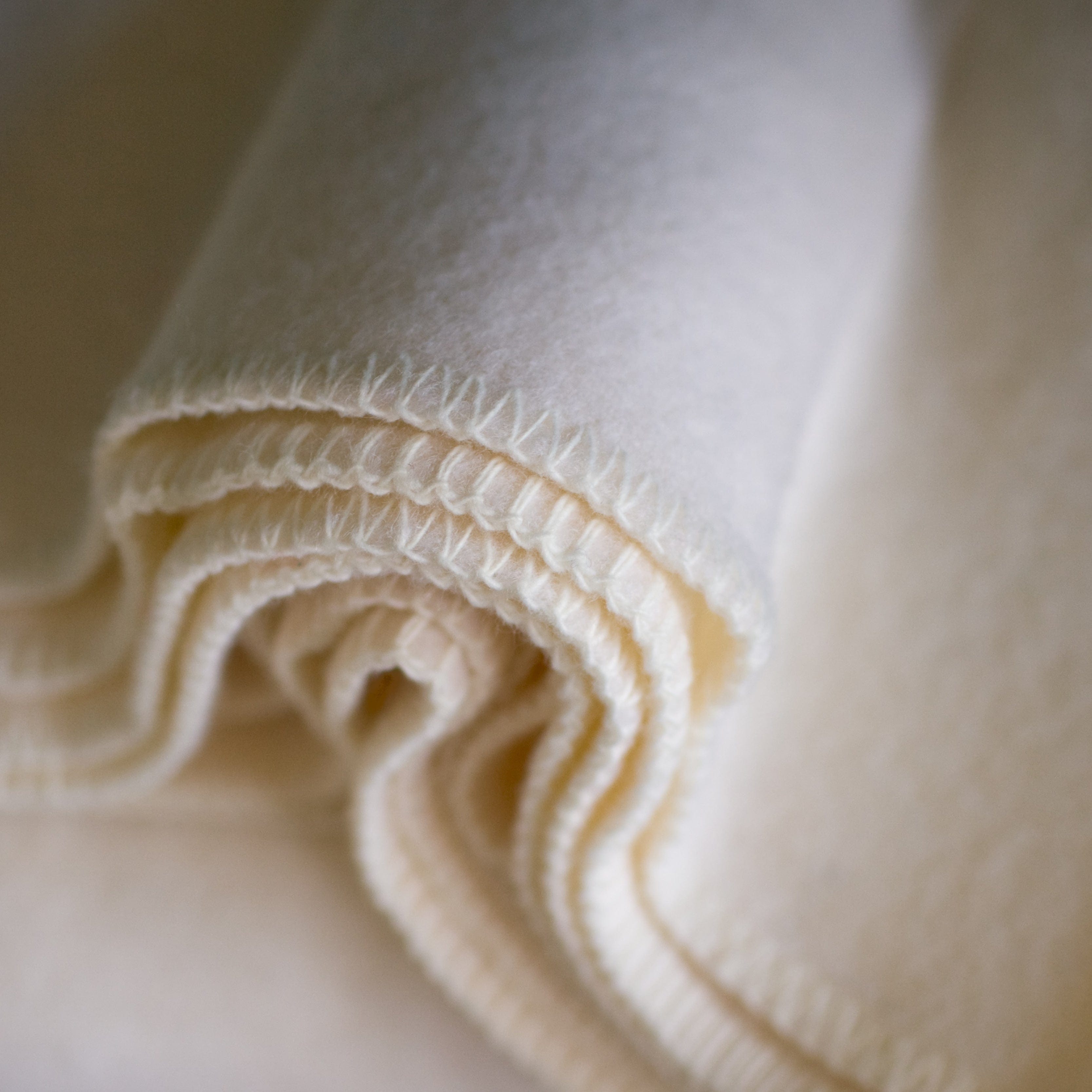
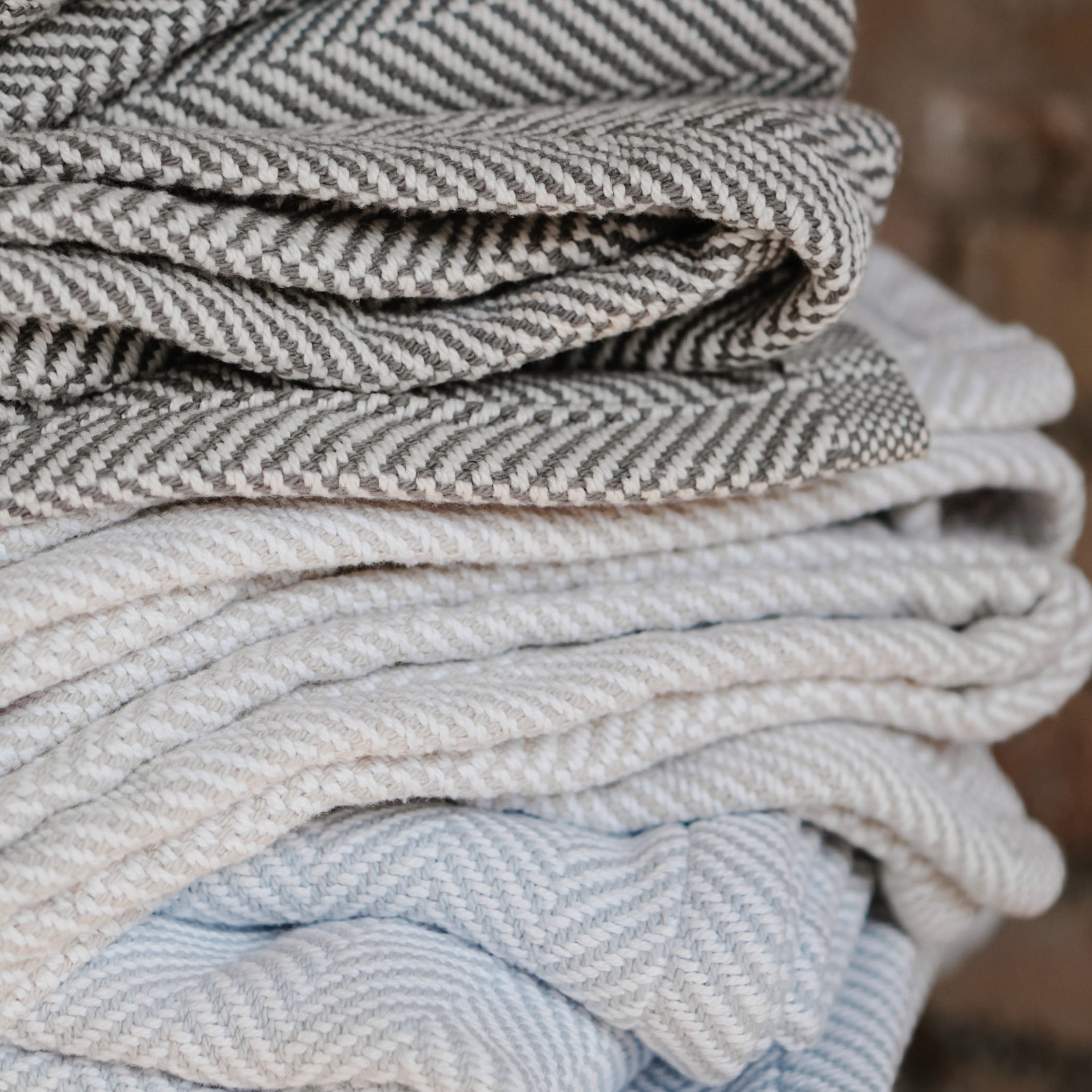
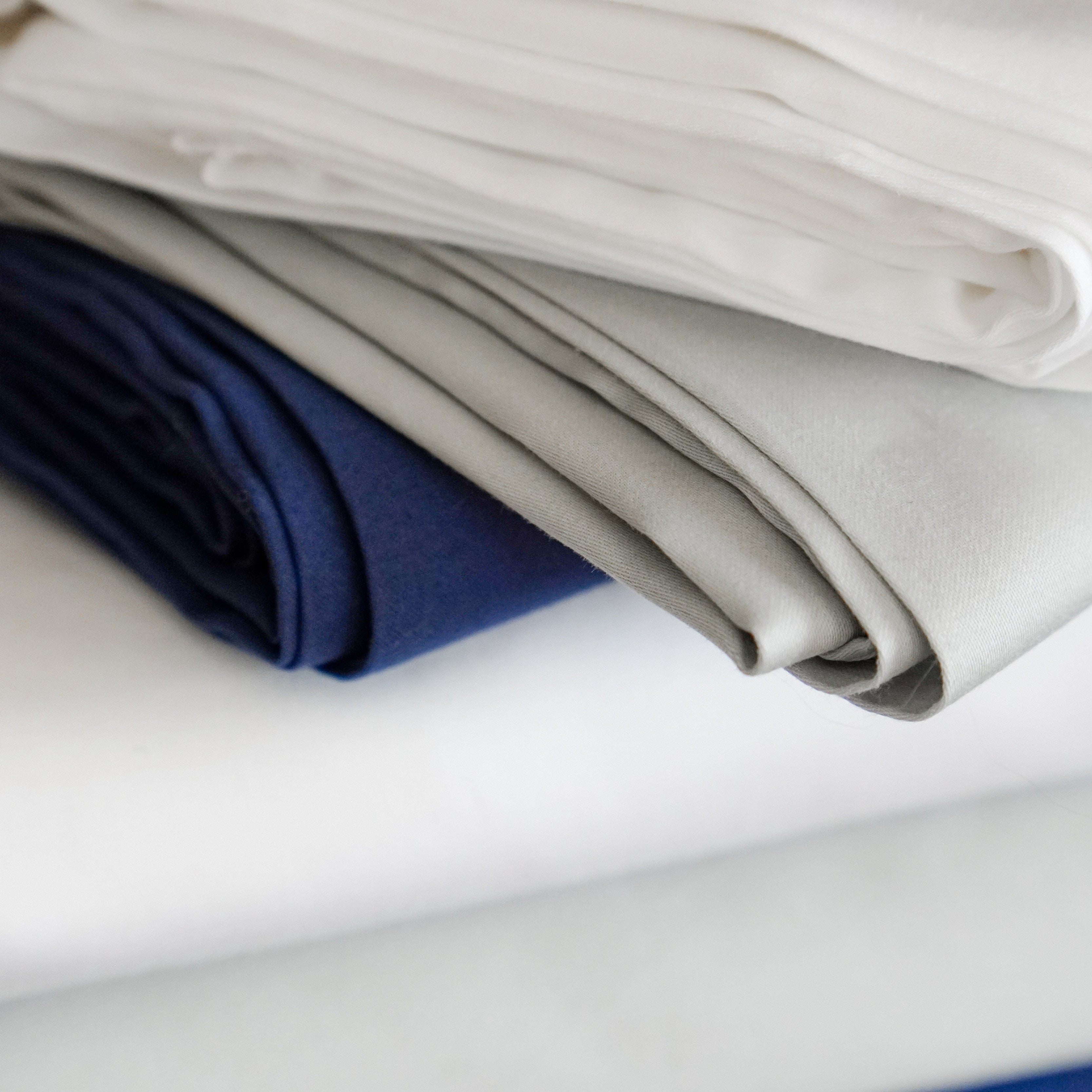
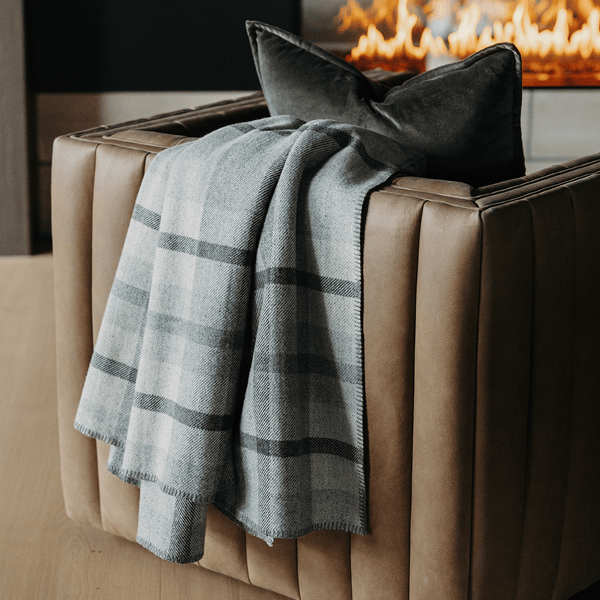
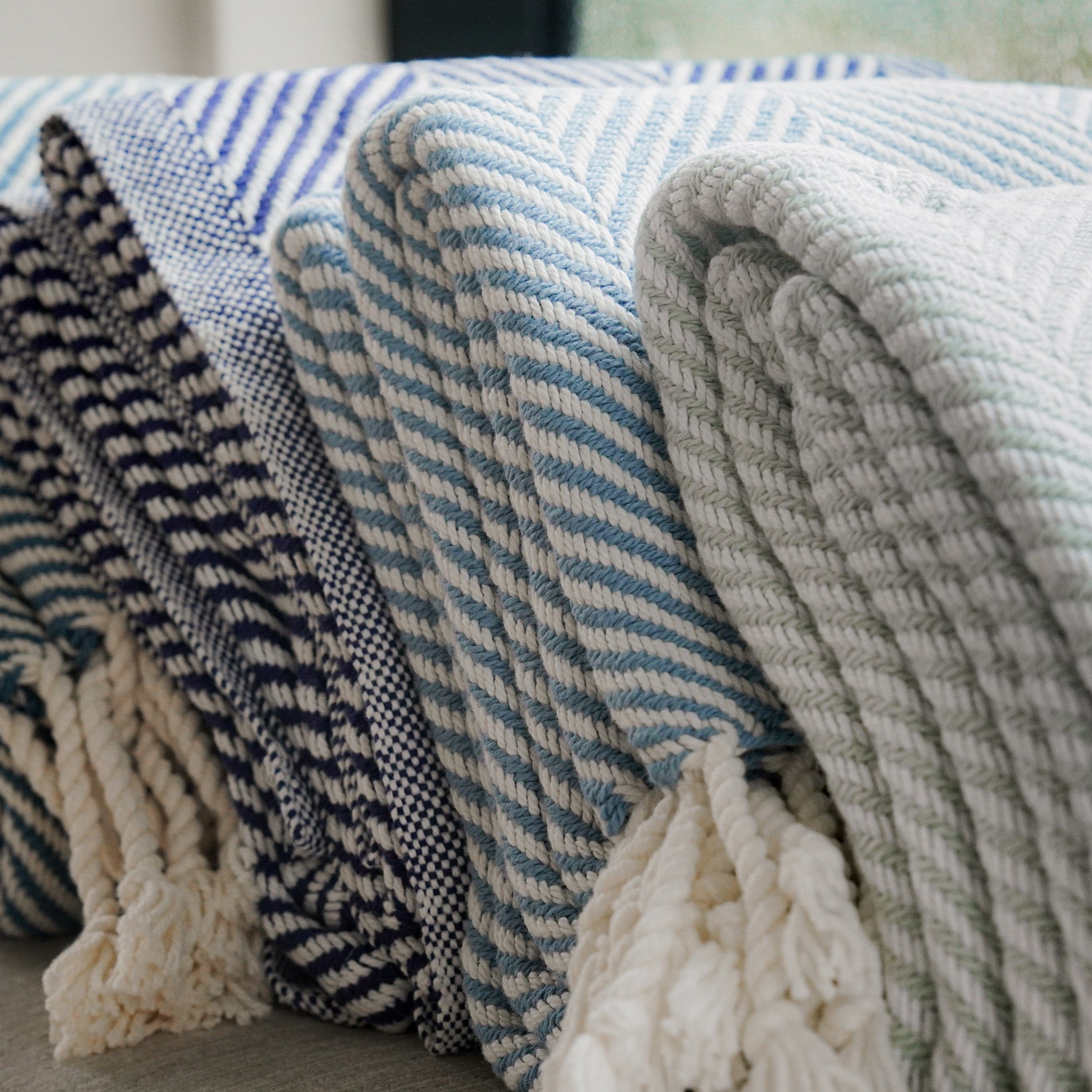

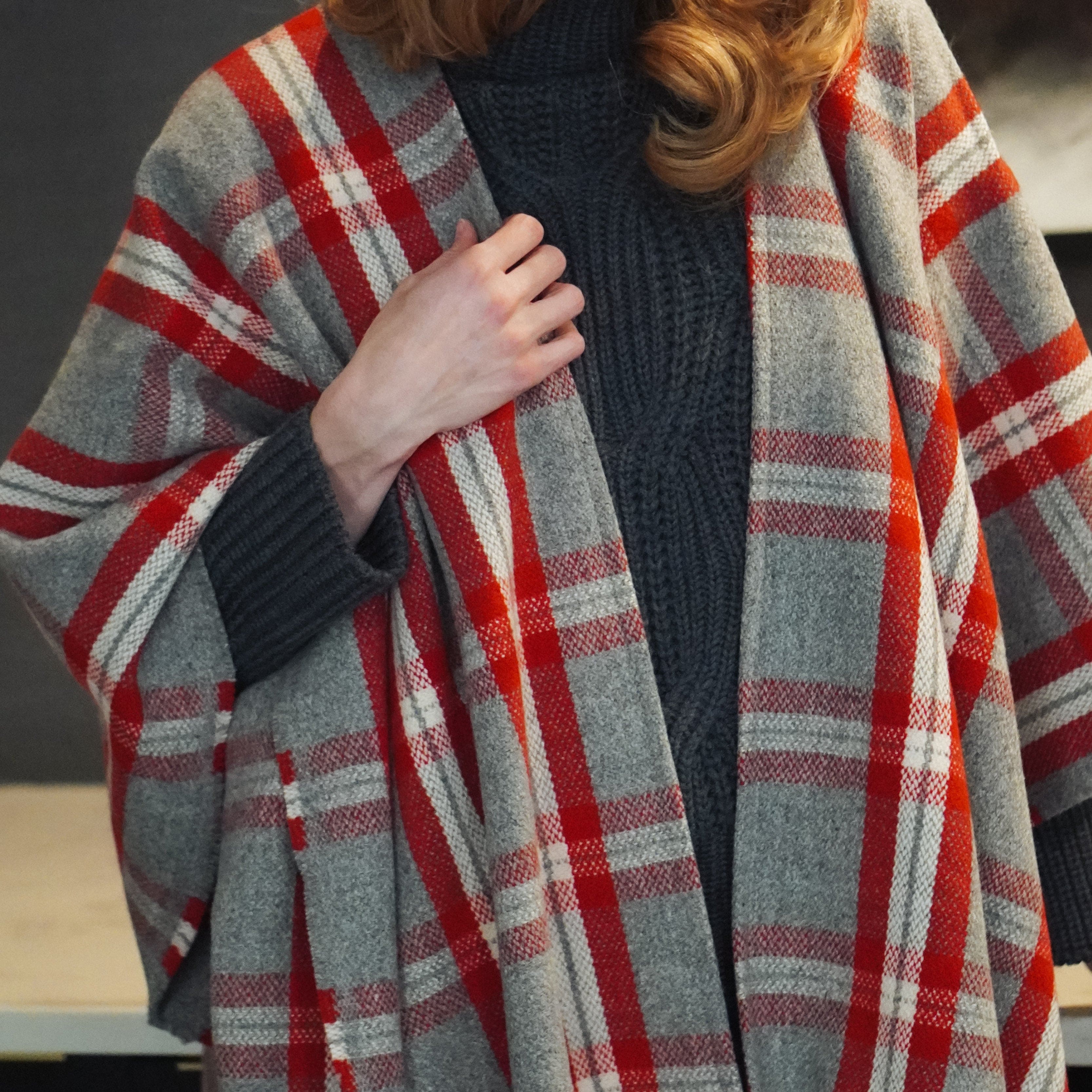
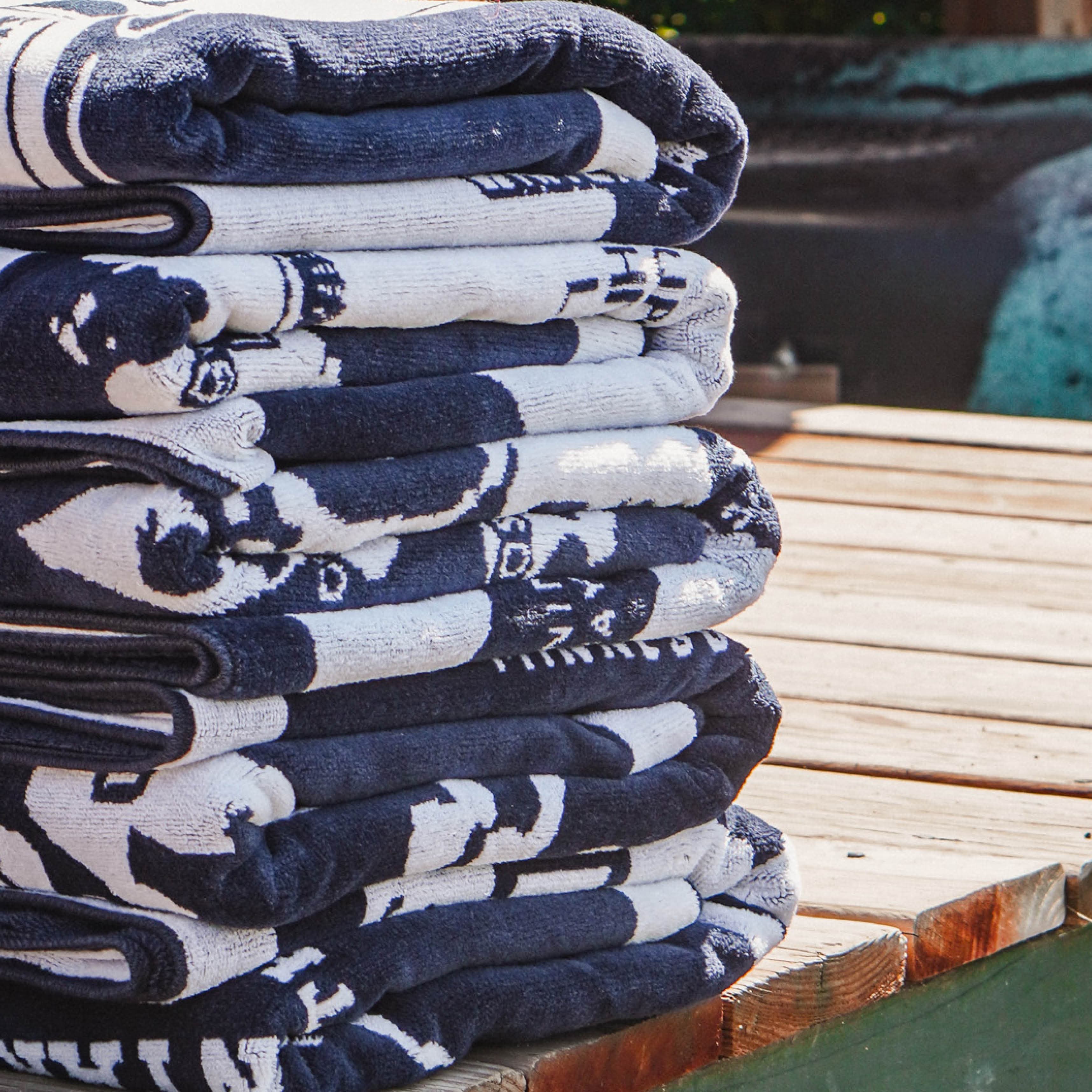
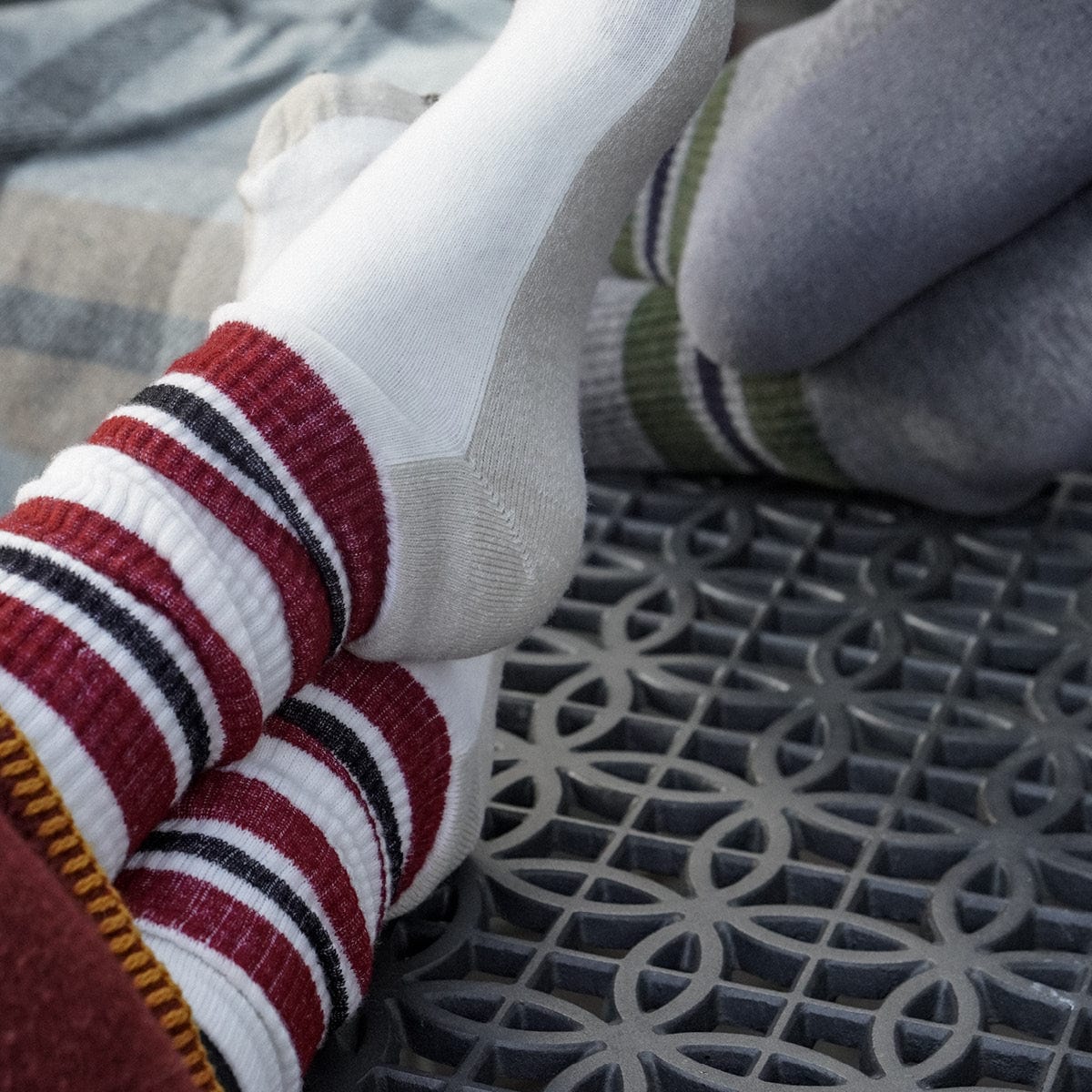



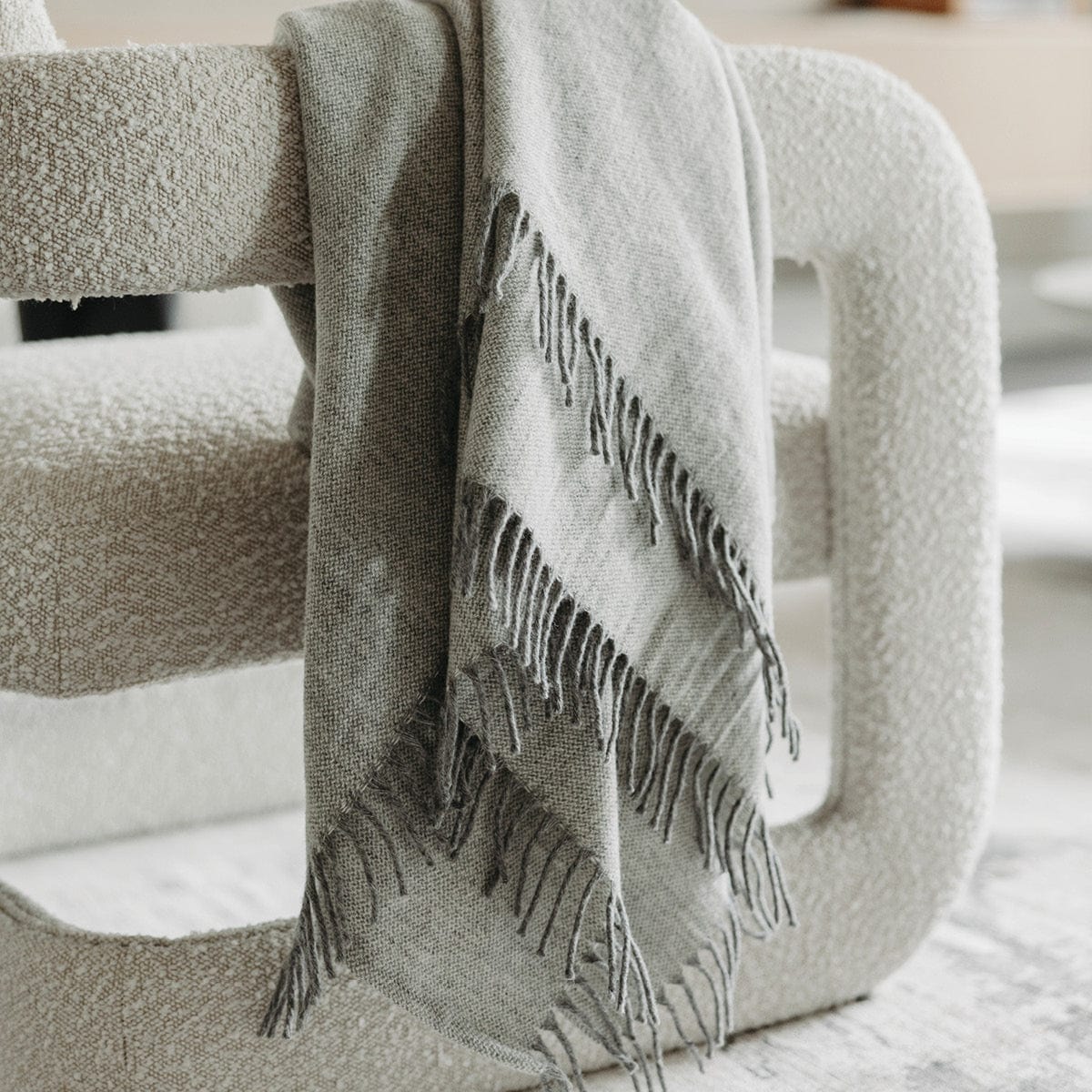

At Faribault Mill, we’ve been working with wool for over 160 years—and for good reason. It is the best textile on the planet, with a dozen remarkable qualities that no other fiber, natural or synthetic, can match. Shorn from sheep just once a year, wool is a 100% natural, renewable resource that has been trusted for centuries. Its unique structure delivers unmatched performance—naturally insulating in cold weather, breathable in warmth, and able to regulate temperature for year-round comfort. Wool is exceptionally strong, elastic, and resilient, bouncing back to shape even after years of use. It absorbs moisture without feeling damp, wicks away perspiration, and resists odors, making it ideal for restful sleep and everyday comfort. Beautiful, versatile, and biodegradable at the end of its long life, wool proves that the best performance technology is still made by nature.
The Benefits of Wool

Natural & Renewable
Wool is the gift that keeps on giving, literally. Every year sheep grow a new fleece, making wool a renewable resource. Between these necessary haircuts, the sheep graze on natural grasses which can help to sequester carbon in the soil, helping to mitigate the impacts of climate change. Finally, once a woolen product is discarded, it is 100% biodegradable in both land and marine environments.

Recyclable & Biogradable
Among all of the major apparel fibers, wool is the most recycled fiber on the planet. Known for being a durable and long-lasting material, it does not need to be replaced as frequently as synthetic materials, can take on several new forms in its lifetime as the top used recycled textile, and once it is disposed will biodegrade completely in both land and marine environments.

Easy Care
Incredibly low maintenance, wool is a no-fuss fiber. Stain, sag, wrinkle and odor-resistant, it does not require nearly as much care as other fabrics. However, thanks to many years of innovation, many of our products are safe for your washing machine and in some cases even the dryer.
learn more about wool care
Naturally Flame-Resistant
Wool is one of the safest fibers you can choose. It rarely ignites, and when it does, it naturally extinguishes itself without dripping or melting—unlike many synthetic materials. This built-in flame resistance makes wool an ideal choice for bedding, blankets, and home textiles where safety and comfort go hand in hand.

Year-Round Comfort
Wool is active, reacting to changes in body temperature to keep you warm when you're cold but releasing heat and moisture when you're hot. No other fabric is as comfortable in any climate, absorbent yet water-repellent, soil-resistant, fire-resistant, resilient or as versatile as wool.

Remarkable Strength & Durability
Each wool fiber is made of millions of tiny, coiled molecules that stretch and flex instead of breaking. This natural elasticity allows wool to resist wear, maintain its shape, and keep looking beautiful for years—making it one of the most durable textiles in the world.
from raw to retail
The Woolen Process
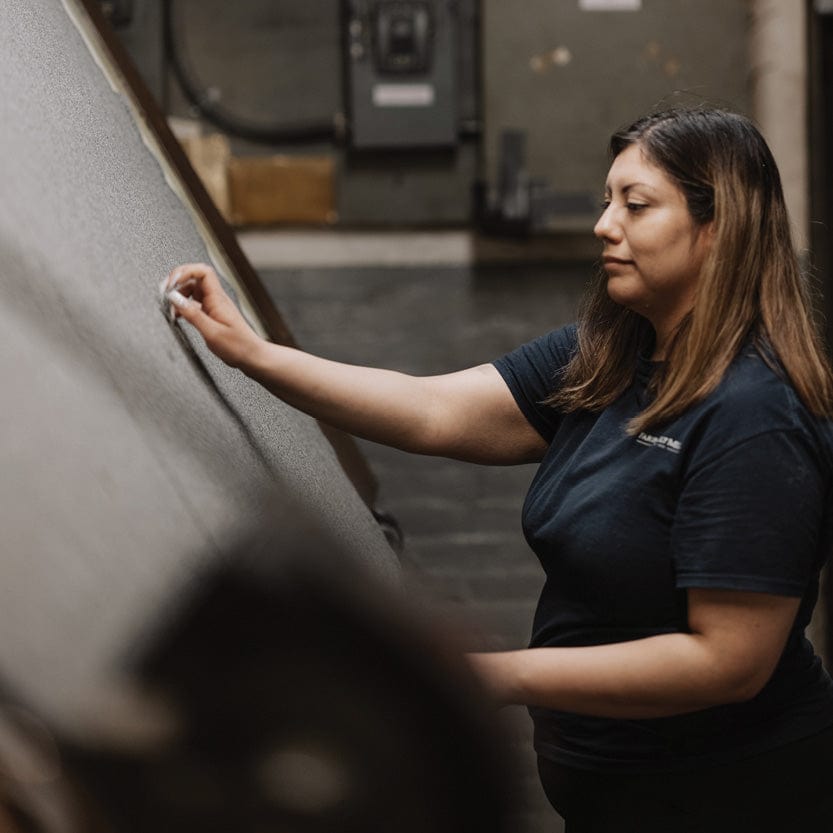
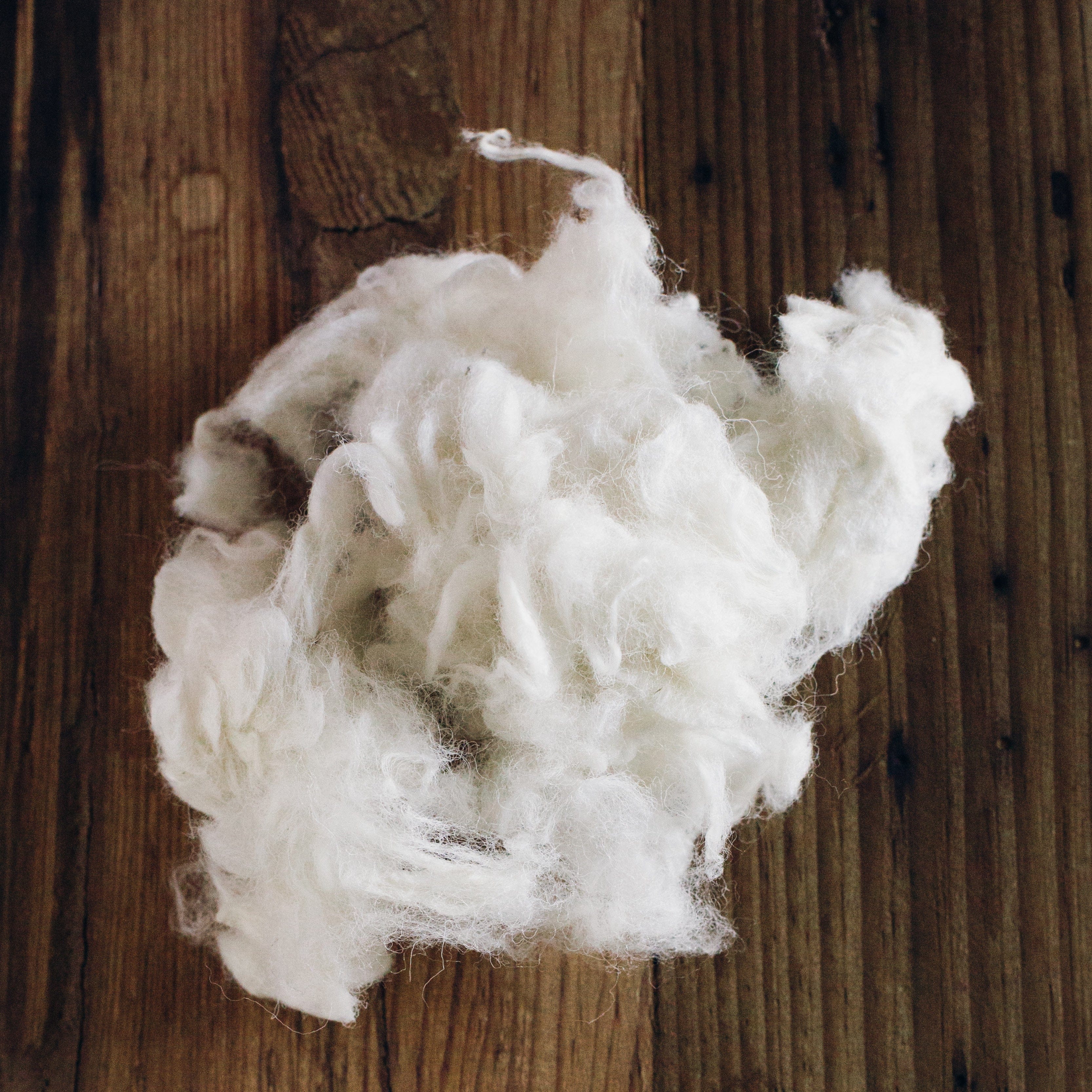
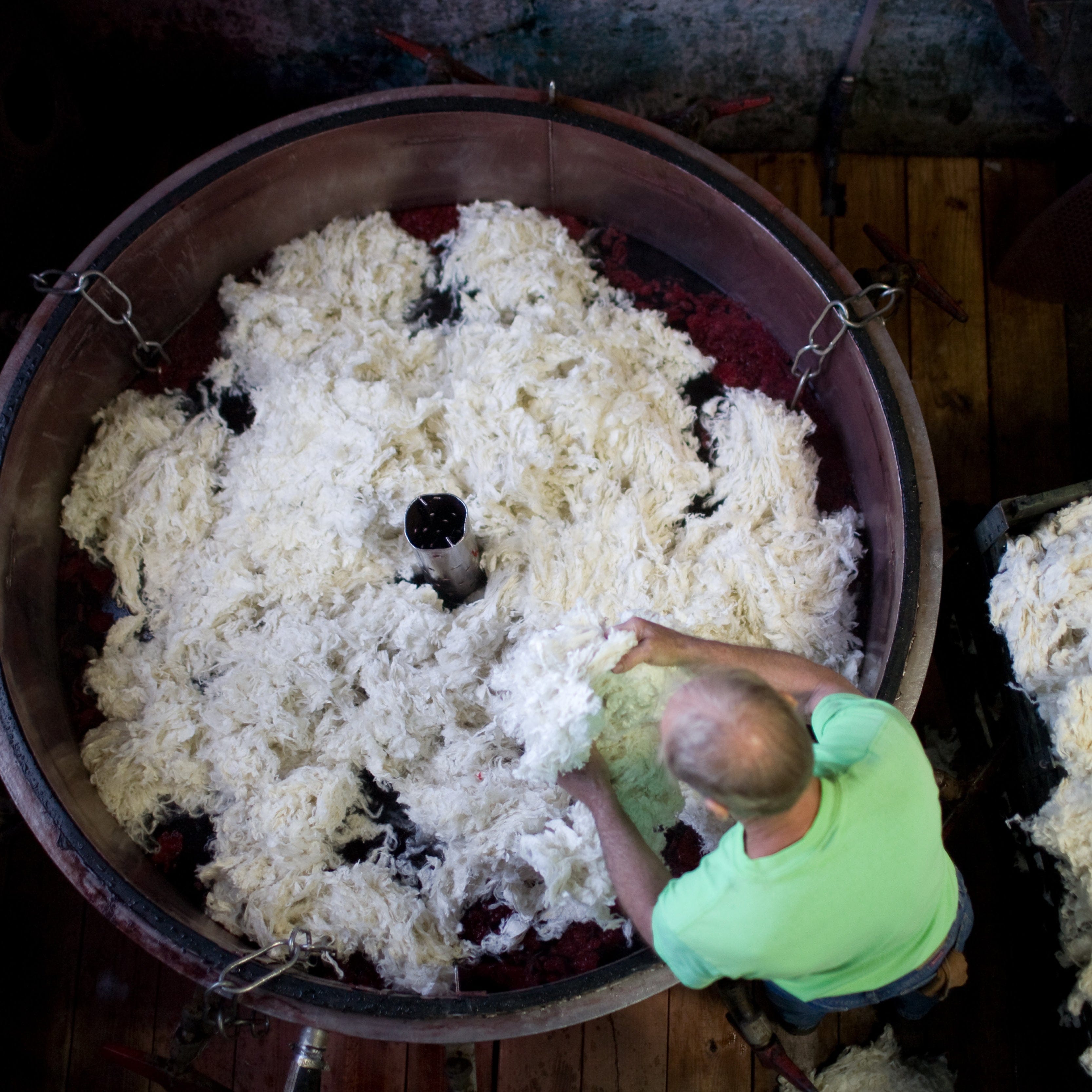
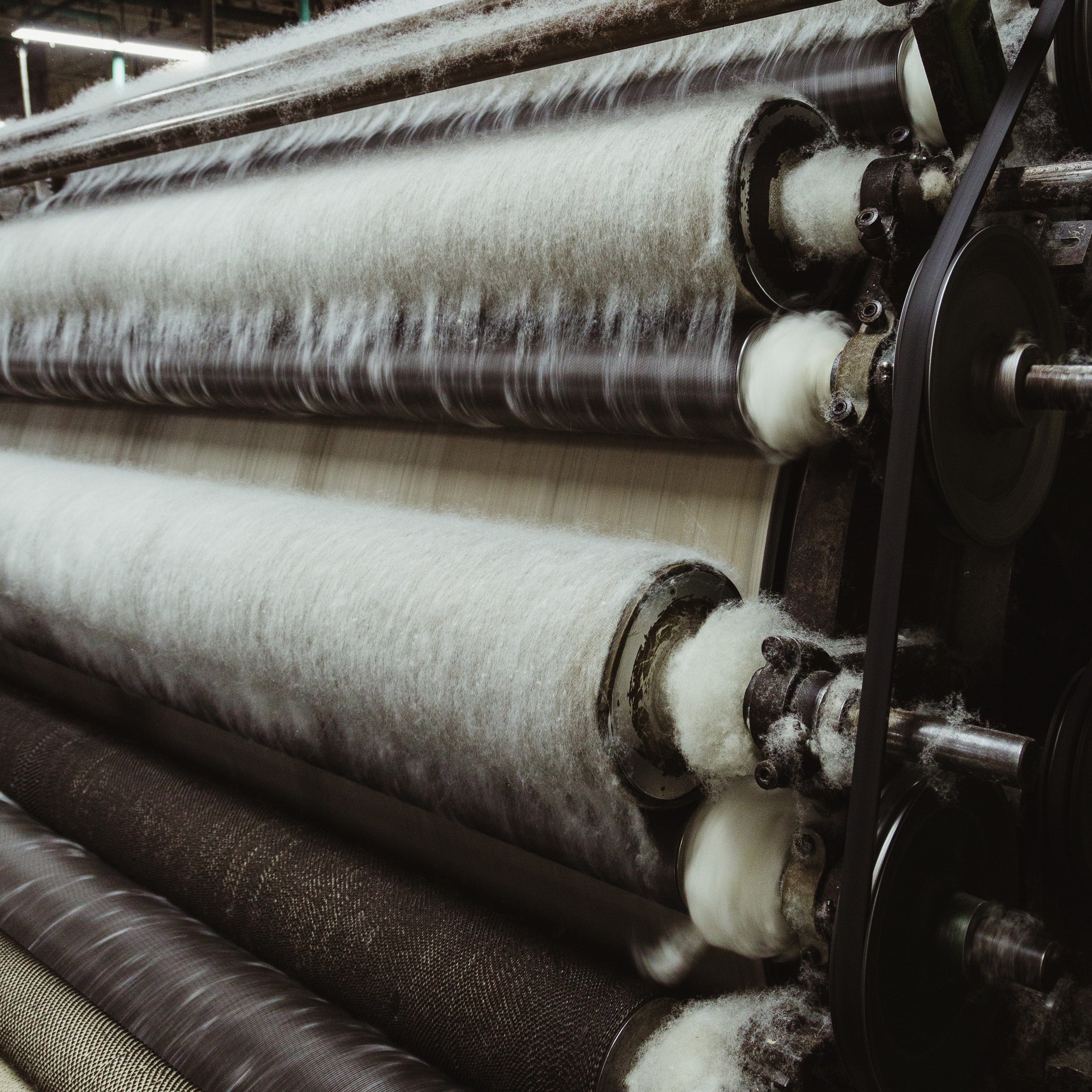
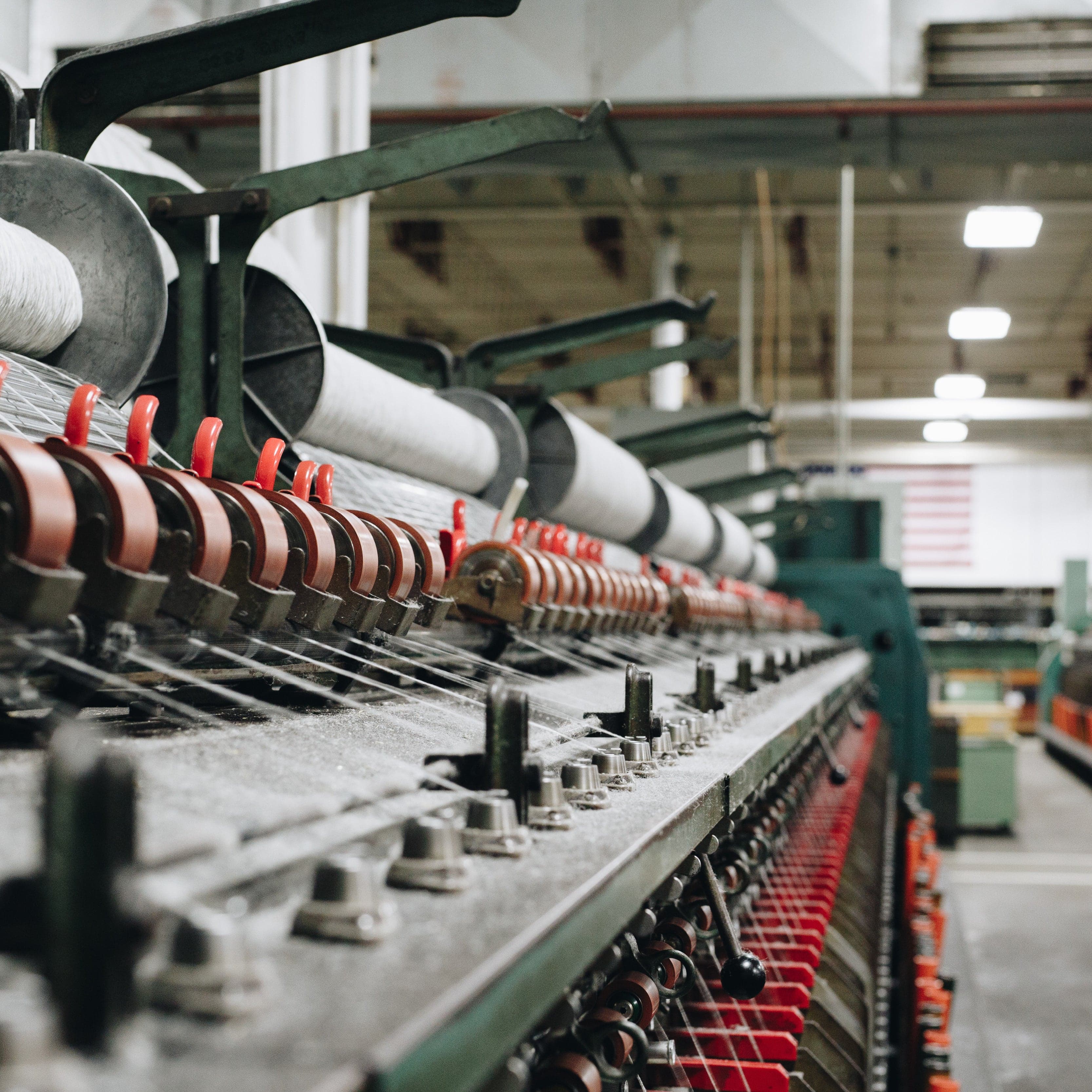
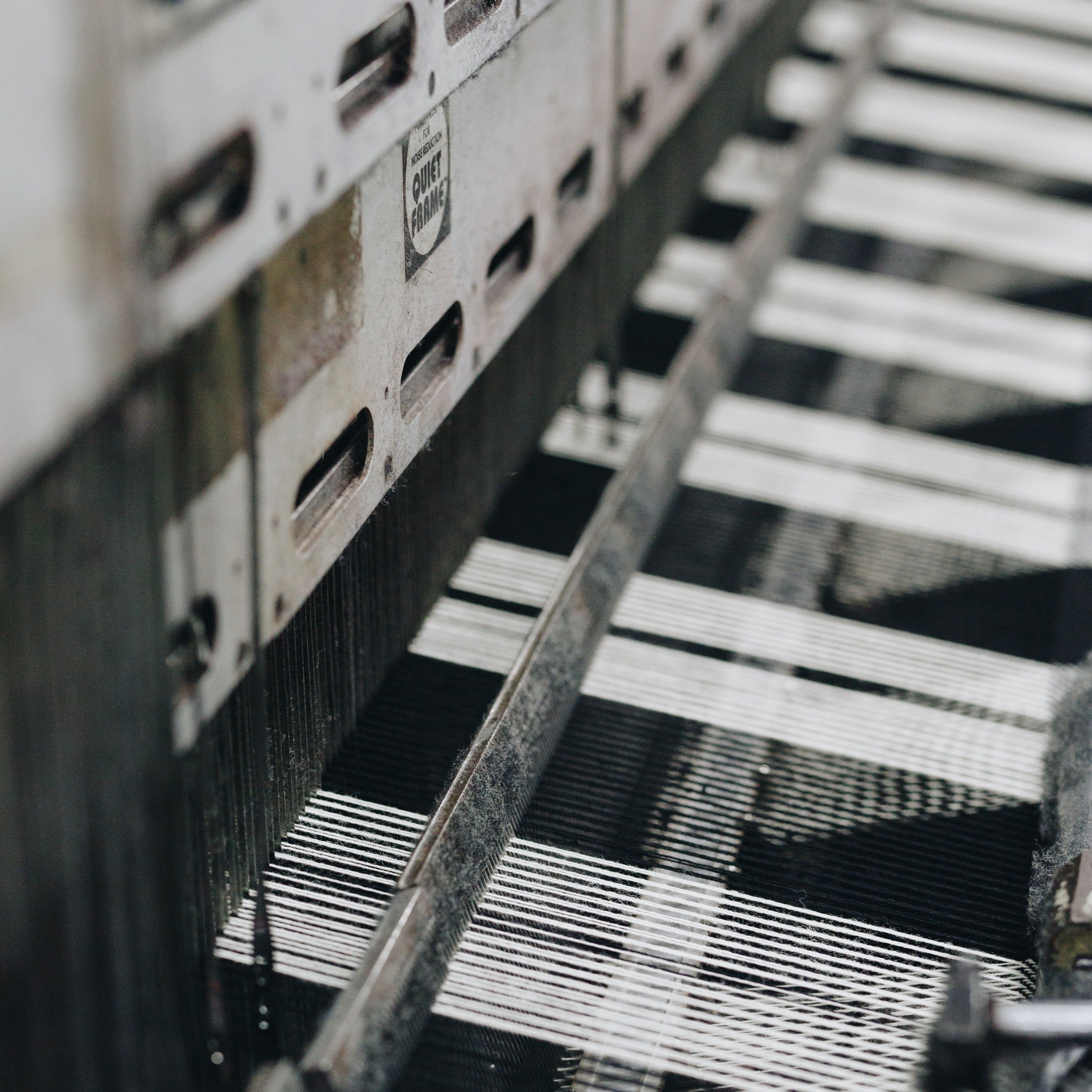
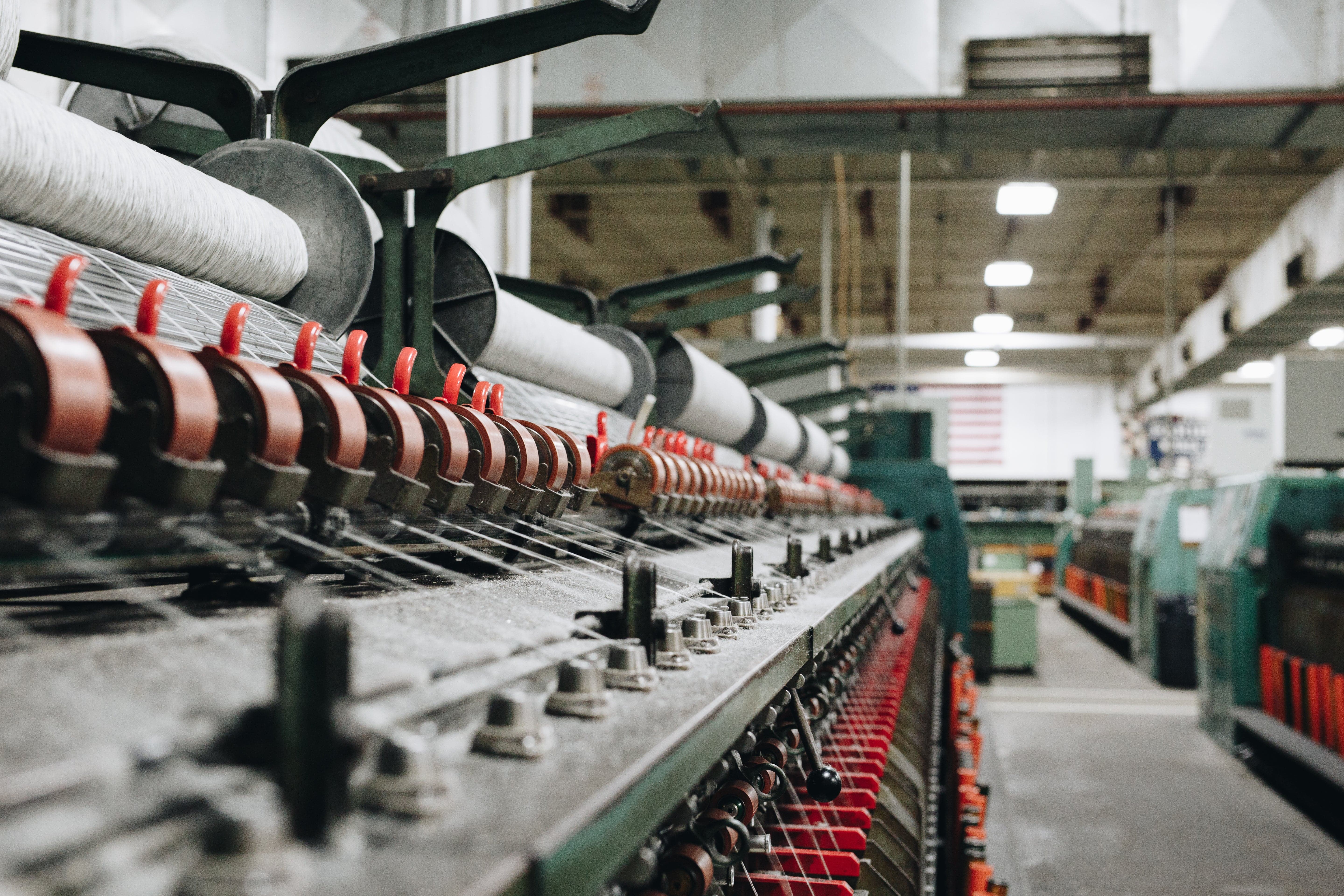
At Faribault Mill, the full woolen process takes place under one roof — a rarity in modern textile manufacturing. While many companies outsource individual steps like spinning, weaving, or finishing, we do it all ourselves. From raw wool to finished product, each blanket moves through more than 20 meticulous steps over the course of about 10 days. It’s a process built on precision, tradition, and care — and it’s what makes our American-made woolens truly exceptional.
Spinning Jenny
The Industrial Revolution (1760-1850) began in England and spread throughout Europe and the Americas over the course of the next several decades. The Industrial Revolution did not reach America until the 1820s and began with the textile industries in the northeast. Expanding technology and the invention of new machines forever changed the way manufacturing and industry took place. The textile industry was greatly impacted by a number of new inventions such as the flying shuttle, the spinning frame and the cotton gin. But it was the invention of the Spinning Jenny by James Hargreaves that is credited with moving the textile industry from homes to factories. The move from a domestic cottage based industry to factories allowed the expansion of the Industrial Revolution from England throughout much of the world.
James Hargreaves was a weaver in Blackburn, Lancaster. Although this area was known as a major textile center, prior to the Industrial Revolution the production of cloth from raw goods took place within cottage industries. All work was done by individuals within the home and entire families were involved. Men were often the weavers while children assisted in cleaning raw materials and women spun the materials into threads or yarns. The process was time consuming and merchants wanting to meet the demand for textile goods were often frustrated by the huge gap between supply and demand. The expense involved in transporting raw materials to numerous locations, waiting for finished textiles to be made by hand and then the finished goods to be picked up and transported back to the merchant was also an incentive to search for alternatives. While the invention of the flying shuttle and later the power loom made it possible to weave materials faster, spinning of raw materials into threads and yarns was still done by hand one thread at a time. Spinners were unable to keep up with the increased demand for threads.
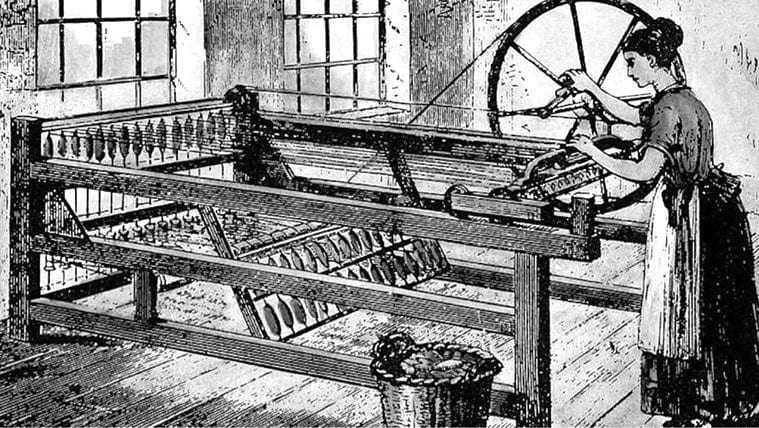
James Hargreaves may have designed the spinning jenny as an improvement over an earlier machine invented by Thomas High in 1763 or 1764. While never patented, High's machine used six spinning wheels that were bolted together and powered by a single large wheel. James Hargreaves' spinning jenny was said to have been designed after he saw his wife's spinning wheel knocked over and saw the spindle continue to spin. The spinning jenny used eight different spindles that were powered by a single wheel. This allowed one spinster to produce eight threads in the same amount of time it previously took to produce one.
Spinning Jenny
Later versions of the spinning jenny added even more lines which made the machine too large for home use. This led the way to factories where these larger machines could be run by fewer workers. With machines and workers concentrated in one place, the transportation costs of raw materials and finished goods were greatly reduced. Factory owners also had greater control over workers and began a division of labor that had individuals responsible for different stages of the manufacturing process. This led to increased production and often a demand for workers to keep up with quotas set by the factory owners. The invention of the spinning jenny and other inventions that improved the efficiency and production of textiles was the beginning of the Industrial Revolution that shifted England, Europe, and the United States from an agrarian society to an Industrial economy.
As with all change, there were advantages and disadvantages to the use of the spinning jenny and other inventions at the time. The spinning jenny allowed more threads and yarns to be produced by fewer spinners. The early spinning jenny also produced a weaker thread than could be produced by hand so there was a decrease in quality until improvements were made to the machines and a dependable power source became available. With the use of water to power later versions of spinning and weaving machinery, quality and strength of the cloth produced was greatly improved. While many factors in England including the availability of workers along with the increased demand for textiles produced ideal conditions for the economic growth of the textile industry, without the invention of the spinning jenny, progress would have continued at a much slower pace.
A traditional story maintains that the Spinning Jenny was named after one of Hargreaves' daughters or his wife. Yet he had no daughter named Jenny and his wife was named Elizabeth. The word jenny is an old world word used as a reference to an engine. There is some indication that James Hargreaves worked with Thomas High to improve on an earlier invention of a mechanical spinning wheel and improved the design which was then named a spinning Jenny after Thomas High's daughter. Regardless of how the invention came to be named, it changed forever the way textile manufacturing was accomplished and led the way to the Industrial Revolution.